AltaLux 3.0 brings optional AI object selection to IrfanView, reduces colored noise in lifted shadows, and adds a smoother, zoomable preview. Object selection runs locally on your CPU.
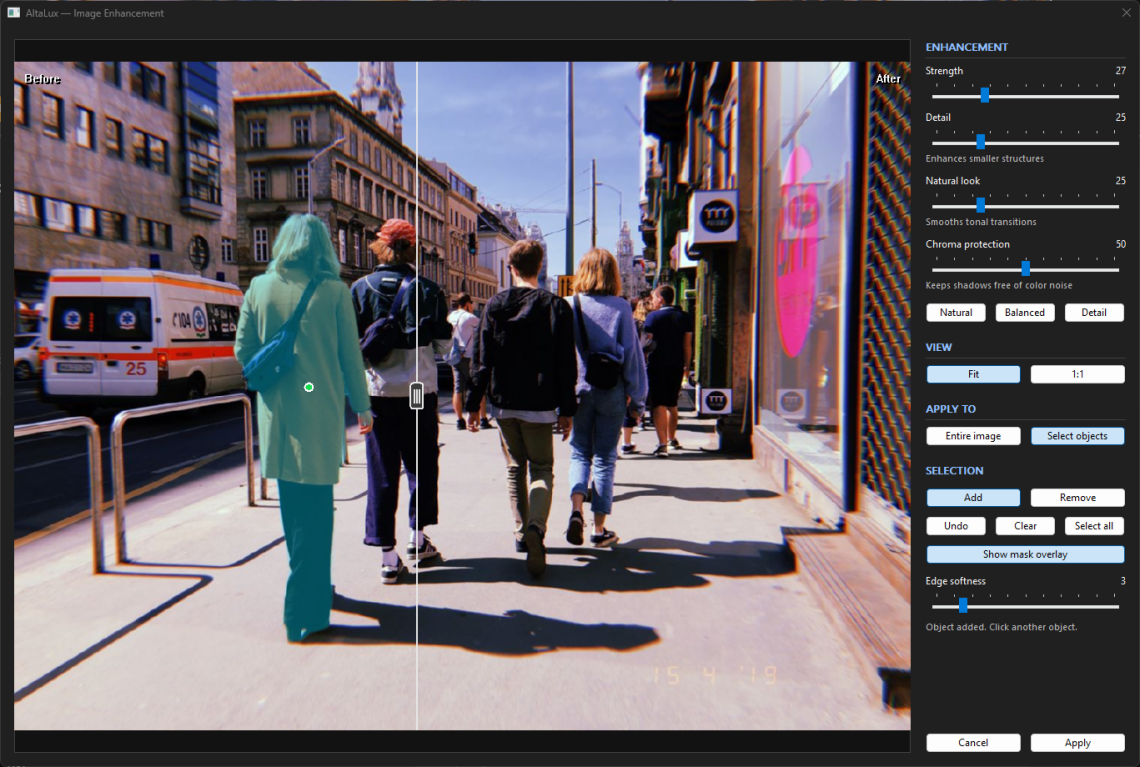

AltaLux 3.0 brings optional AI object selection to IrfanView, reduces colored noise in lifted shadows, and adds a smoother, zoomable preview. Object selection runs locally on your CPU.
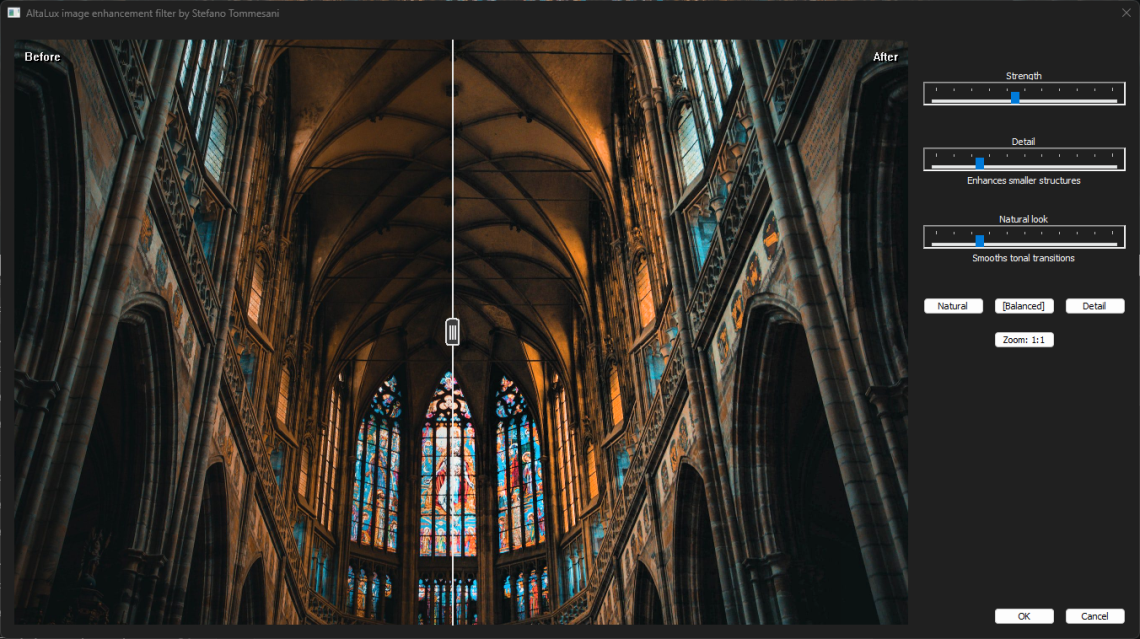
The AltaLux V2 plugin enhances image processing through a multi-layered approach using CLAHE, improving local contrast but requiring more computation. Optimization focused on kernel vectorization using SIMD, with benchmarks guiding performance. The process revealed limitations of SIMD in certain operations and transitioned from SSE2 to SSSE3 for efficiency, ensuring an…
AltaLux 2.0 replaces the old Intensity/Scale workflow with a three-layer multiscale enhancement engine, a large before/after preview, and controls that describe the look users actually want: Strength, Detail, and Natural look.
When a compression format becomes well known, the entropy coder is rarely the part people remember: ZIP is usually described as “LZ77 plus Huffman”, but the LZ77 part gets most of the attention because it is easy to explain: find a repeated string and replace it with a reference to…

Version 1.9.1.92 represents the most significant update to AltaLux since its initial release. This version brings critical bug fixes, substantial performance improvements, comprehensive documentation, and enhanced user experience. Critical Bug Fix: Color Preservation The Problem Previous versions used an incorrect algorithm for preserving color when applying luminance enhancements. The old…

Home security cameras have become increasingly popular in recent years, with many homeowners opting to install cameras to keep their homes and families safe. One of the benefits of these cameras is that they can capture footage of potential intruders or other suspicious activity around the home. In this blog…
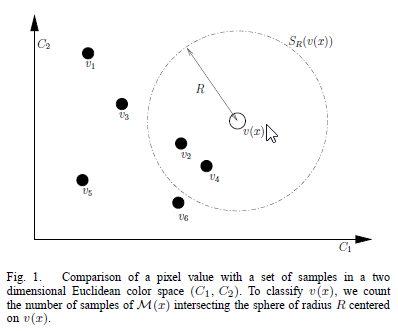
The ViBe algorithm In the paper “ViBe: A universal background subtraction algorithm for video sequences“, Olivier Barnich and Marc Van Droogenbroeck introduce several innovative mechanisms for motion detection: Pixel model and classification process Let’s denote by v(x) the value in a given Euclidean color space taken by the pixel located…
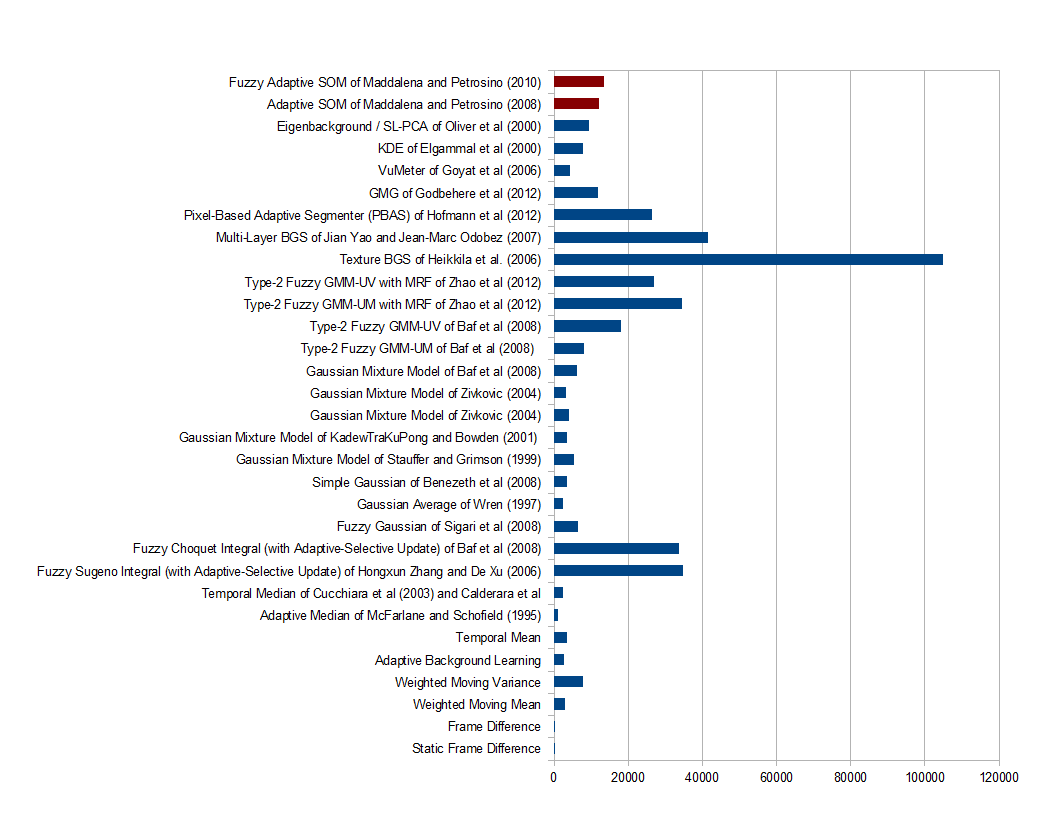
Performance map Adaptive SOM of Maddalena and Petrosino (2008) paper link {youtube}o7VdgyoxPgA{/youtube} Detection of moving objects in video streams is the first relevant step of information extraction in many computer vision applications. Aside from the intrinsic usefulness of being able to segment video streams into moving and background components, detecting…

Performance map Eigenbackground / SL-PCA of Oliver et al (2000) paper link {youtube}4c1lLY3ta08{/youtube} We describe a real-time computer vision and machine learning system for modeling and recognizing human behaviors in a visual surveillance task [1]. The system is particularly concerned with detecting when interactions between people occur and classifying the…

Performance map Pixel-Based Adaptive Segmenter (PBAS) of Hofmann et al (2012) paper link {youtube}DjCLUQg4dow{/youtube} In this paper we present a novel method for foreground segmentation. Our proposed approach follows a non-parametric background modeling paradigm, thus the background is modeled by a history of recently observed pixel values. The foreground decision…