Introduction Project scheduling presents a fundamental challenge: given a set of tasks with varying durations, dependencies, and resource requirements, how can we predict when each task will complete? Traditional approaches often rely on static calculations that assume perfect conditions. The scheduler described in this article takes a different approach by…
-
-
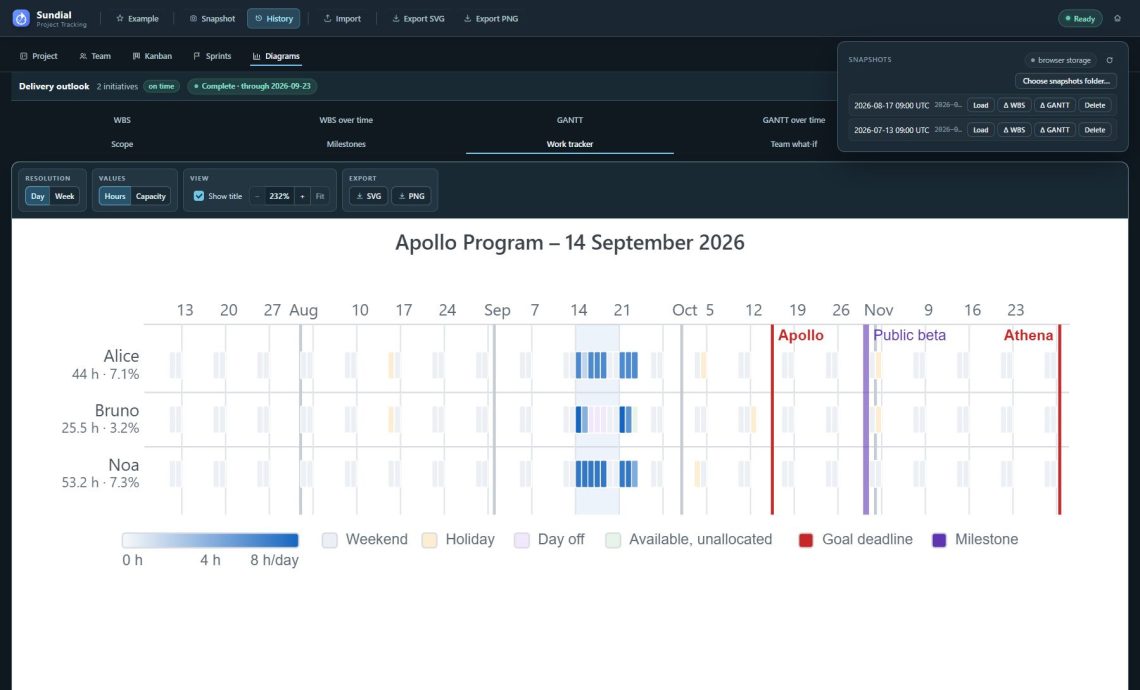
In this third installment, we’ll analyze how the simulation estimates completion dates by tracking both the skills developers bring to the table and the skills required to execute groups of tasks. This matching process pinpoints which developers will be overburdened with work, and which ones will starve because not enough…
-
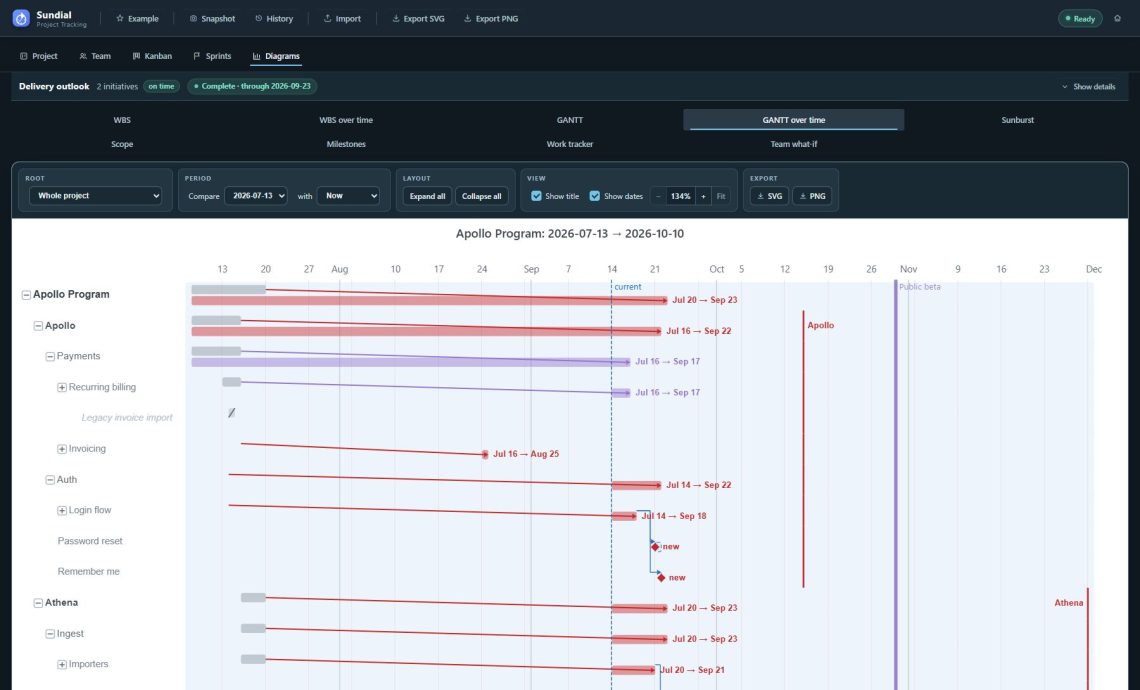
This second installment explores how to effectively represent changes in projects, highlighting what has changed in a given period of time. To do so, we will use differential approaches to two fundamental project management tools: Work Breakdown Structures and GANTT charts. Work Breakdown Structure: from comprehensive to focused The standard…
-
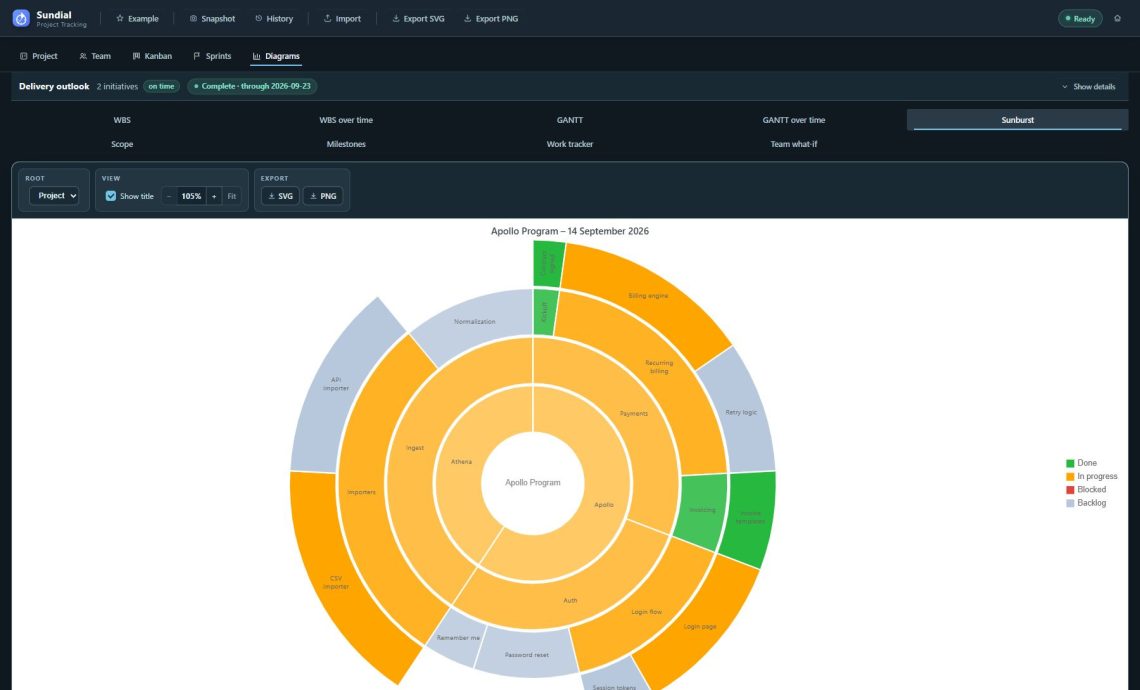
Every Project Manager knows the frustration of trying to answer a simple question: “How is the project really doing?” The answer usually involves opening multiple tools, cross-referencing spreadsheets, and mentally stitching together information scattered across GANTT charts, status reports, and backlog trackers. By the time you’ve assembled the picture, the…